By Andrew Bengoku
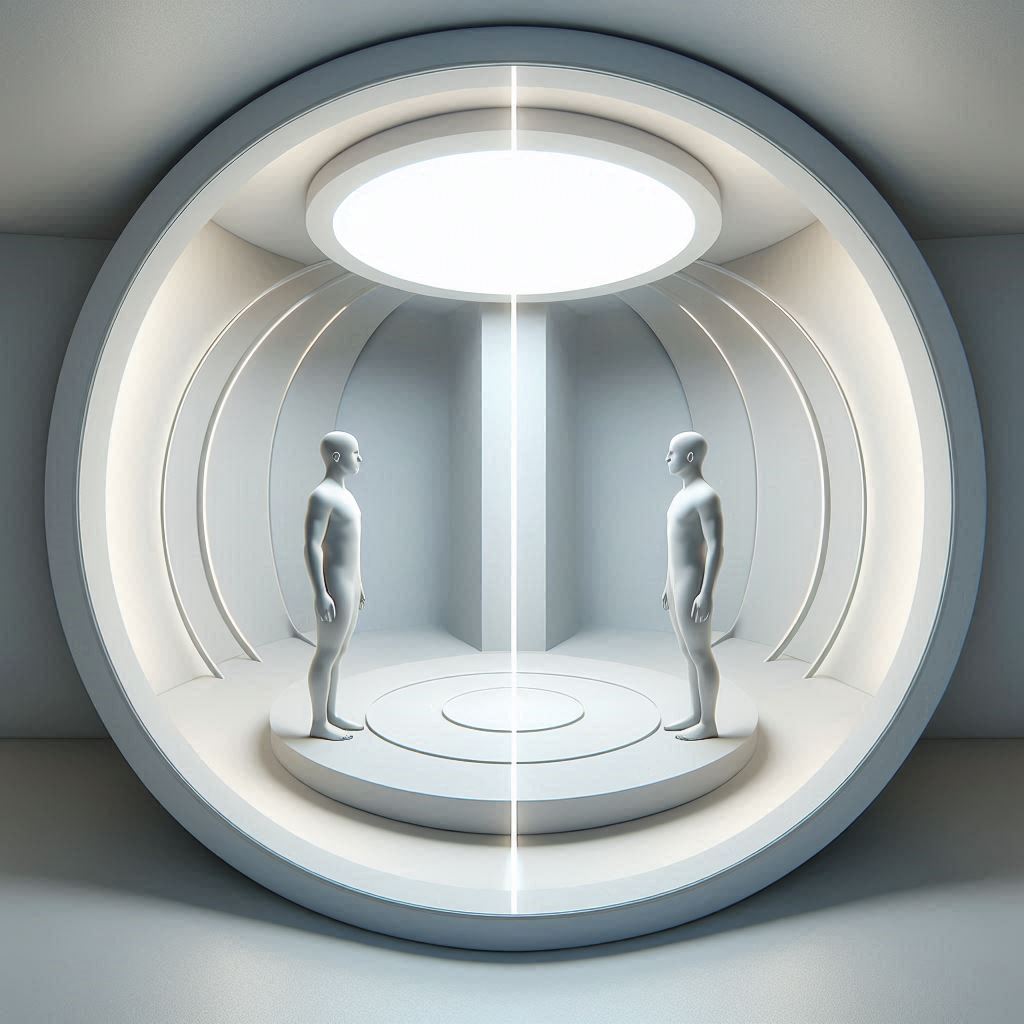
If the mind consists of storable information, then we have a serious problem regarding the concept of personal identity. The issue is rather straightforward: if (1) the mind is a set of electrochemical processes enabled by neural structures unique to each individual, and (2) it could be possible to gather these biological details at the fine resolution of proteins and various small molecules, then one could capture a person’s mind as storable data. This data could then be used to create a precise replica of the mind, such as through cloning the individual and using the stored information to reconfigure the cloned brain, thus potentially reconstituting the person’s mind in multiple individuals. While such technology is not currently available, the concept does not violate any known laws of physics. Though technologically challenging, this ‘project’ could eventually become feasible!
As straightforward as this may seem (to some), this scenario introduces a plethora of philosophical headaches. Indeed, numerous thinkers have extensively explored this scenario through thought-provoking conjectures and hypothetical experiments. Here, we engage in a similar intellectual exercise, striving to adhere to biology and physics. This exploration will lead to the conclusion that open or isolated systems, in physical terms, might play a critical role in establishing the self as either a singular or pluralistic phenomenon.
Thought experiments on this topic come in different flavors, but here is our original take: Suppose an individual is brought into a room (the “Identity room”) characterized by stunning architectural symmetry. The room is round and smooth with no landmarks on the walls, roof, or floor. Two identical beds are positioned in the middle, perfectly symmetrical relative to the main features of the room. The beds have no designated pillow side, simply two simple rectangular beds. The door closes and instantly disappears, seamlessly blending into the smooth wall. After waiting for a few hours for something to happen, this person falls asleep on the floor, then wakes up in one of the two beds. It’s unclear which one, as there are no landmarks for reference. Whoever orchestrated this scenario also did something quite remarkable: the person starts to look around, and when turning towards the other bed, a mirror image is there, identical in form and movement. But there’s no mirror: an actual clone has been created, identical in body and mind. It’s impossible to say which one is the original and which is the copy; they are indistinguishable, and there are no landmarks to relate their positions to the original person. The individual has been duplicated. No longer a single individual but two identical persons, looking and moving alike, speaking and thinking identically. There are no features to distinguish them: wrinkles, skin marks, length of the nails, hair follicles, everything down to the molecular level is exactly the same. Due to the symmetries in the room, they also experience identical sensory stimulation: visual, auditory, tactile, etc. They execute the same sensory-motor plans and follow the same cognitive programs.
So, we’re now facing at least two challenging problems: first, determining who is the original person, and second, figuring out how to brake this “mirror world”, making the two individuals act differently, if it’s even possible.
Let’s address the latter problem first. What if we make them fight? Perhaps the agitation of a fight could disrupt the symmetry of their behavior. But then again, it seems futile: identical sensory-motor responses, both individuals throwing a right fist towards the left cheek resulting in the same fall to the ground and bruises on the face. So, are they destined to forever mimic each other? Perhaps not…
If the mind consists of electrochemical processes occurring in the brain, then we just need something capable of disrupting the symmetry in these dynamics. Consider sensory inputs: if they were different, they might serve as the catalyst. For instance, photons (light) could differentially induce electrical activity in the retinas, leading to distinct activation patterns in the brain and, eventually, divergent behaviors. The same principle applies to auditory, somatosensory, or other sensory stimuli.
However, the room in question precludes this possibility; everything is identical for the two individuals. But the term “identical” is quite ambiguous: do we mean at the atomic or quantum-level resolution? Returning to the example of the retinas in the eyes, we cannot guarantee that photons will interact with photoreceptors in precisely the same way in the retinas of both individuals. Quantum principles, such as the indeterminacy principle (yes, all discussions on this topic end up referring to this principle, good citation record for Heisenberg!), may introduce subtle differences. These minuscule variations could ultimately impact overall brain electrochemical activity and, consequently, the minds of the two individuals. This scenario aligns with theories linking the brain to chaotic systems, suggesting extreme sensitivity to tiny perturbations.
Our sadistic room designer, truly enjoying this mirrored spectacle, might consider countermeasures: no lights, making the individuals deaf, severing peripheral nerves transmitting somatosensory signals, and subjecting them to various harrowing deprivation procedures.
However, such measures may not suffice to prevent “mind divergence.” For instance, one could speculate that any form of high-energy cosmic radiation could interact with brain molecules (no matter how improbable) and eventually trigger divergence. Even the gravitational field could subtly vary from one location to another within the room, potentially influencing how the body moves and in turn, the brain’s biochemistry.
We can continue exploring this line of reasoning, but a clear pattern emerges: as long as an individual remains an ‘open system,’ mind divergence becomes possible. In physics, open systems are those that can interact with their surroundings. So, as long as there’s a body susceptible to sensory stimulation or, more generally, a physiological system sensitive to external perturbations, divergence becomes likely.
In isolated systems—completely sealed off from their surroundings—divergence might prove challenging but not impossible. In the presence of complete isolation, we’d need an intrinsic unpredictable process—one that occurs within an individual’s physiology without external influences and unique to that individual. However, even the definition of the boundaries of this isolated ‘system’ is challenging. Should it encompass the entire body? But humans need air, so should air molecules be part of the isolated system, interacting identically with both individuals? Or should we focus solely on the brain? If so, is the cerebral spinal fluid an external medium or part of the isolated system? These complexities abound, I am sure you got the gist.
For now, let’s say we agree on a definition of these boundaries and let’s get back to quantum mechanics. Here, we find intriguing examples of possible divergence in isolated systems. Consider for example radioactive isotopes present in our bodies that decay unpredictably. The synchronization or pre-planning of these decay times across cloned individuals would be exceptionally challenging—even for a sadistic designer—likely impossible given our understanding of physics. So these asynchronous decays could trigger a divergence in the minds of isolated cloned individuals. Yet, when we delve into the quantum realm, almost anything becomes possible. So, without getting into Penrose-ian views, we should acknowledge that the intrinsic variability associated with quantum phenomena remains elusive, but tantalizing.
In general, we confront the likely possibility of a perpetual mirror-world within isolated systems, but not within open systems. In open systems, various environmental factors can trigger divergence. When two individuals occupy distinct positions in space (no other available option!), they experience different environmental conditions. Consequently, even if we were to start with two identical minds, they would inevitably diverge, becoming distinct individuals.
Let’s step back to the beginning of this hypothetical experiment, and try now to address the first question, the one of identity: who is the original person? If you were that individual, you’d find yourself faced with two ‘yous,’ each believing the other to be a copy. But why is this a problem? Have the laws of physics been violated, or do we perceive it as problematic due to preconceptions or cognitive biases? Creating a flawless replica of an electrochemical system might prove challenging, but it doesn’t defy the laws of physics—especially if we focus on the macroscopic level of description, such as proteins (a foundational assumption at BioFixation).
Short side digression: the mirroring behavior exhibited by the two individuals raises yet another profound issue, that of free will. The notion that mirroring behavior and cognition arise because of identical biology, down to the resolution of individual proteins, strongly suggests a deterministic view of our minds. According to this perspective, the dynamics of proteins, and small molecules fully determine our behavior. The mirroring behavior emerges precisely because our meticulous room designer has crafted identical replicas of the bodies at the molecular level. While mirroring behavior is unsustainable in open systems, the question of free will persists. It shifts our focus to the environmental variables that influence our deterministic brains. We’re currently working on a new blog post dedicated to exploring the complexities of free will—stay tuned!
End of the D-tour. So why is it a problem to have a perfect replica of an individual’s brain and mind? As time progresses, the two minds might diverge more and more, and after a few decades, the divergence could become so significant that, for example, one person embarks on a religious journey and becomes a monk, while the other turns into a murderer. Which one would be ‘you’? The monk, the criminal, or both? Once again, would this present a problem of some sort? In nature, we know of only one way to create a human mind: sexual reproduction. Therefore, we find it quite challenging not only to conceive of other methods but also of methods that evolve along entirely different pathways from those found in nature. The evolution of the mind from newborn (or pre-born) to adult follows very stereotypical patterns, but in our experiment, the evolution is radically different. We started with an already well-formed adult mind and allowed the new mind to evolve from this reference point. While things are dramatically different for a newborn baby, there are also several ‘qualitative’ similarities with our experiment: the newborn mind is not a completely blank slate; the genetic material passed down from the parents has significantly influenced the structure and possibly the electrochemistry of the young mind. The starting point is neither a perfect replica of the mind of the mother and the father, nor is it something entirely unrelated.
Overall, a compelling idea emerges: the recognition or acceptance that there is no inherent dilemma or issue concerning the ambiguity surrounding the identity of the original individual (be it through duplication or the “multiplication” of the self), and the divergence of selves as a mechanism generating novel minds—keeping the issue of freewill aside.
At the heart of this discussion we must recognize a strong “intellectual inertia” to scrutinizing the singularity of our self. We can accept the concept of divergent personas, akin to Dr. Jekyll and Mr. Hyde, where, based on our mind, an entirely distinct personality may emerge albeit not concurrently, but sequentially. Yet, we struggle with the notion of a “simultaneous” replication of ourselves; an exact duplicate of our mind that, with each moment, calls into question our individuality.
The story of “Dr. Jekyll and Mr. Hyde”, with multiple personalities emerging sequentially from the same brain, highlights another interesting problem, the one about the continuity of the self. Although we experience ourselves as a continuous process, day in and day out, biologically, we undergo constant changes. The intricate molecular machineries enabling electrochemical processes to occur in our brains are continuously replaced. If one were to tag the molecular components in our brain today, they would significantly differ from those in the following year. Yet, we still perceive a seamless continuity of our identity. A useful analogy for exploring this concept can be found in artificial neural networks. But wait…how does this relate to the ‘identity room’? Ah, we’re D-touring again… It’s time to read a new blog post!
 BioFixation
Leave a comment